Quick test. Don't open any app.
Write down every account you have. Savings, that FD you opened at a branch you haven't visited in six years, mutual funds, demat, PPF, EPF, the LIC policy your father took in your name when you were nineteen. Now the loans. Now the property papers. Now where each of these physically sits.
How far did you get? Most people stop around eight.
Not because they forgot. It's because the honest answer to "where is it" is — different app, different bank, different drawer, and one thing that lives only in someone's head.
That's not your fault. Nobody sat down one day and decided to scatter their financial life across fourteen places. It just happened, one sensible decision at a time, over twenty years.

Now here's the part that bothers me. You're the only person who can do that exercise. And you're the one person who won't be around when it's needed.
Why I actually built this
I'll be blunt about it, because the polite version isn't true.
Our judiciary is in about the worst state I can imagine. Overloaded to the point of paralysis. Tilted towards whoever can afford to keep showing up. And the laws themselves carry no empathy in them — they were written to settle property, not to help a family that has just lost someone.
Put that on top of the most populous country in the world, where education and healthcare are getting worse for most people, not better. Then add the thing nobody wants to say out loud — we have almost no financial literacy around death. We plan for weddings, admissions, EMIs, retirement. We do not plan for the end.
Because talking about death is taboo. You know this. Bring it up at a family dinner and watch what happens. Someone will tell you not to say such things. Someone will change the subject. Nobody will ask the obvious question, which is — if something happens to you tomorrow, does anyone in this room know what you own and what you owe?
So people don't write wills. They don't share information. It feels like a hassle, and it feels like inviting bad luck, and both of those feelings are stronger than the risk, right up until the risk stops being hypothetical.
And then the family is in crisis. Not grief — crisis. Nobody knows the worth of what's been left. Nobody knows where to start. And the system they have to go to for help is the one I described three paragraphs ago.
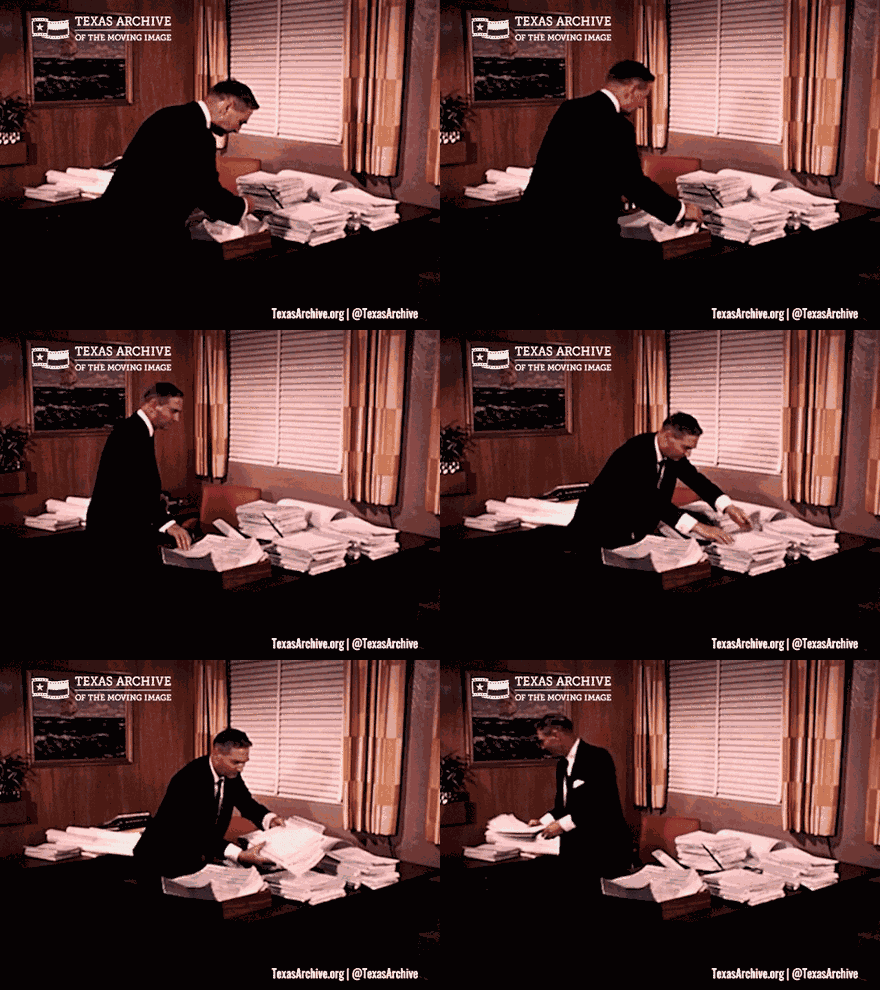
Two problems, not one
One Inheritance solves both of these, and I want to be clear that they're separate problems.
The first one is disclosure. Most advice on this topic is some version of "just tell your family". That advice ignores how families actually work. Maybe you don't fully trust one of them. Maybe there's a second household nobody talks about. Maybe you simply don't want your children knowing your net worth while you're alive, which is a completely reasonable thing to want.
So the app doesn't require you to tell anyone anything. You record it once, you assign items to specific people, and none of it is visible to any of them until it's released. You can change your mind at any time. Nobody gets a notification that you did.
The second one is the legal side — the will itself, and estate planning. That's the part people postpone for decades because it means a lawyer, an appointment, and a conversation they don't want to have.
Doing only the first is a nicely organised list with no legal weight. Doing only the second is a legal instrument that assumes somebody already knows what exists. You need both, and almost nobody has either.
A nominee is not an heir
This is the single most expensive misunderstanding in Indian personal finance, and it gets discovered at the worst possible moment.
A nominee is closer to a trustee. It's the person the bank is permitted to hand the money to so the bank is discharged of its obligation. It is not a statement about who owns it. Ownership is decided by your will, or if you didn't write one, by succession law and whoever has the patience for it.
Plenty of accounts have no nominee at all. Plenty have one added twenty years ago, when the family looked different.
And while we're here — a will doesn't tell anyone where to look. It distributes what's known about. If nobody knows an account exists, no legal instrument in the world distributes it. That FD is simply gone, sitting quietly in a bank that has no reason to call anyone.
The RBI runs a search tool called UDGAM for unclaimed deposits, covering 30 banks as of March 2024. Think about what it means that such a thing had to be built.
The question I couldn't answer for months
Software doesn't know you've died. It only knows you stopped opening it.
Those are not the same thing, and everything that can go wrong lives in that gap. Release too eagerly and you've handed someone's entire financial life to their family because they went trekking somewhere with no signal. Release too slowly and you've built a vault that outlived its purpose, which is the exact failure the app exists to prevent.
What I ended up with isn't a switch. It's a sequence, where each step is slower and asks for more than the one before it, and you can stop the whole thing at any point right up to the end. Signing in cancels a release in progress. And the later steps deliberately can't be cancelled with just a password, because the person quietly calling off a release isn't always the person it belongs to.
That's on the site properly. What I'll say here is that designing it felt less like building a feature and more like writing a procedure for something you hope never happens. I hadn't done that kind of engineering before.
"So you've built the perfect thing to steal"
Yes. That's the correct criticism and I'd rather state it than wait for someone else to.
The short answer is that your vault content is locked on your device before anything is sent, so what sits on our servers isn't readable as the thing it is. The longer answer, including the genuinely uncomfortable parts — because inheritance means the key has to survive you — is written out in full in the security model. Not summarised into something reassuring. Written out.
If you're the sort of person who reads those before signing up, read that one. It's the document I'd judge this app by.
What it's taught me
That the hard part of a product is almost never the part that looks hard.
I assumed the engineering would be the difficulty. The engineering has been ordinary. What's been difficult is that every screen is asking someone to sit with the fact that they won't always be here, and a form field that's merely neutral in a banking app reads as cold in this one. I've rewritten the same four sentences of copy more times than I've rewritten any function in it.
The other thing — this is the first product I've built where the person I'm designing for isn't the user. The user is the one filling it in. The person it's actually for is someone who'll open it once, on the worst day of their life, with nobody to ask for help.
That changes every single decision.
Do the thing, not the reading
It's free to start, it's on both stores, and setting up the first time takes about five minutes. If you have parents whose paperwork you couldn't find today, they're the ones to send this to.
But if you close this and do nothing else — go and write the list. On paper is fine. A note on your phone is fine.
The list is the whole thing. Everything else is just a better place to keep it.
Link to the website and app
One Inheritance App Store: iOS Play Store: Android
 One InheritanceIf something happened to you tomorrow, would your family find everything?One encrypted place for your bank accounts, insurance, investments, property papers and passwords — that only you can open, and your family can reach when it matters.niviapps.com ↗
 App StoreOne Inheritance App - App StoreDownload One Inheritance by Shubham Paliwal on the App Store. See screenshots, ratings and reviews, user tips, and more apps like One Inheritance.apps.apple.com ↗play.google.comhttps://play.google.com/store/apps/details?id=com.nivi.dms
No comments yet
Commenting needs an account so a reaction can be one per person, and so a comment can be deleted by whoever wrote it. It never asks any provider for your email address — what signing in does.